
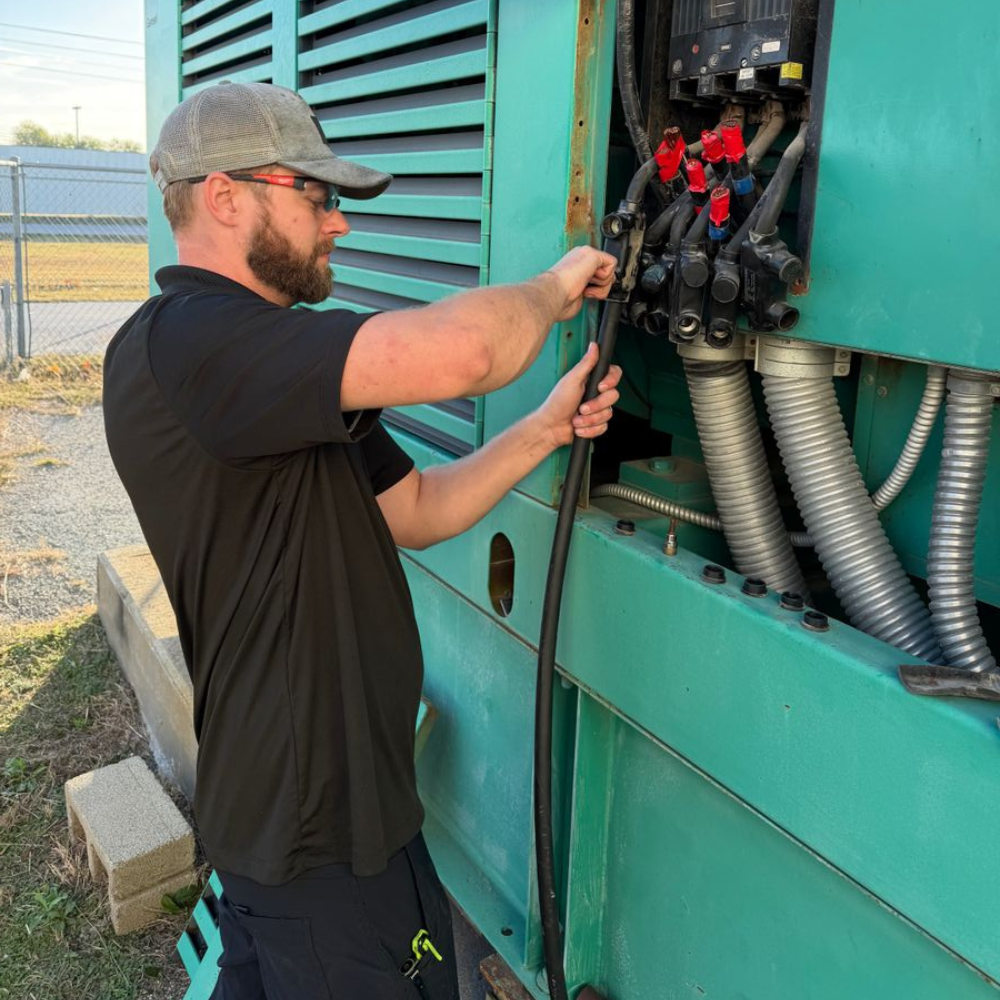
Backup power systems are critical to safe and continuous operation across industrial, commercial, warehouse, and mission-critical environments.
When utility power drops—whether from storms, extreme Texas heat, grid strain, or equipment failures—your generator must start, transfer, and carry load without hesitation. Two of the most referenced standards that shape electrical reliability are NFPA 110 and NFPA 70B.
Although these standards are often mentioned together, they serve very different purposes. Understanding how they work—and how they complement one another—helps facility managers, maintenance leaders, and operations teams build a more dependable preventive maintenance structure while reducing risk across the facility.
This expanded guide breaks down the key differences between NFPA 110 and NFPA 70B and how each applies to generator reliability, electrical safety, and long-term asset performance.
What NFPA 110 Covers: Emergency and Standby Power Systems
NFPA 110 governs Emergency and Standby Power Systems—including the generator, ATS, fuel system, controls, alarms, and any components required for the generator to respond during a utility outage.
NFPA 110 addresses:
Generator performance requirements
ATS operation
System classifications (Level 1 vs Level 2)
Startup time expectations (e.g., 10-second readiness)
Fuel supply considerations
Alarm and monitoring requirements
Recommended testing and exercising frequencies
Documentation of system operation
NFPA 110’s Core Purpose
Ensure that the emergency power system:
Starts on time.
Transfers correctly.
Supports required loads.
Maintains stable output.
Texas Context: This is especially important for Texas facilities where outages often occur under extreme load conditions—heat waves, winter storms, and grid strain events.
What NFPA 70B Covers: Electrical Equipment Maintenance
NFPA 70B focuses on preventive maintenance practices for a facility’s entire electrical distribution system. It is broader than NFPA 110 and covers the electrical ecosystem that surrounds and supports the generator.
NFPA 70B applies to:
Switchgear and switchboards
Distribution panels
Breakers and protective devices
Cables and terminations
Automatic transfer switches (ATS)
Transformers
Motor control centers
NFPA 70B Recently Became a Standard
Its transition from "recommended practice" to a formal standard signals that organizations are increasingly expected to maintain structured electrical preventive maintenance programs.
NFPA 70B Emphasizes Predictive & Preventive Care
Infrared thermography (IR Scanning)
Insulation resistance testing
Torque checks on terminations
Power quality monitoring
Documentation and trend tracking
Maintenance intervals based on equipment condition
Related Reading: Learn what happens when these maintenance steps are skipped in our guide: [Link to Blog 1: Why Generators Fail: Top 7 Early Warning Signs]
NFPA 110 vs NFPA 70B: Side-By-Side Comparison
Focus Area
NFPA 110
NFPA 70B
Purpose
Outage readiness & system performance
Preventive maintenance & electrical reliability
Governs
Generator, ATS, fuel system, alarms
Electrical components across entire facility
Emphasis
Ensures generator performs during outage
Reduces risk of failures through maintenance
Testing
Weekly/monthly starts, transfer tests
IR scanning, torque tests, breaker maintenance
Typical Audience
Facility managers, compliance officers
Electrical maintenance teams, engineers
Key Outcome
Operational continuity during outages
Reduced downtime & equipment degradation
Together, these standards provide a holistic framework for both emergency power reliability and electrical safety.
Why These Standards Matter for Texas Facility Managers
1. They Address Different Forms of Downtime Risk
NFPA 110 focuses on moment-of-failure readiness (Will it start?).
NFPA 70B focuses on preventing the failures leading up to that moment (Is the equipment healthy?).
Related Reading: Dive deeper into identifying risks with our guide: [Link to Blog 6: What a Generator Downtime Risk Assessment Includes]
2. Insurers Increasingly Expect NFPA-Aligned Maintenance
Insurance providers frequently evaluate whether facilities have:
Consistent PM records
Electrical testing documentation
ATS and generator inspection logs
IR scan history
Gaps in documentation can affect risk scoring and claims review.
3. Both Standards Prioritize Documentation
NFPA 110 requires: Start logs, transfer test documentation, and load test results.
NFPA 70B requires: IR images, breaker maintenance logs, connection torque records, and corrective action logs.
Accurate, consistent documentation supports internal audits and improves visibility for facility leaders.
4. Predictive Diagnostics Are Now a Best Practice
NFPA 70B emphasizes tools that detect issues before they escalate:
Infrared thermography
Vibration monitoring
Insulation resistance testing
Power quality diagnostics
These methods reveal loose terminations, overheated components, insulation breakdown, and other early warning signs invisible to the naked eye.
Related Reading: The ATS is a critical convergence point for both standards. Read more in: [Link to Blog 4: ATS Failure Points and How to Identify Them]
How Texas Facilities Can Apply NFPA 110 and 70B Together
1. Build a Unified Preventive Maintenance Program
A strong PM program includes:
Monthly NFPA 110 generator exercises.
Annual load bank testing.
ATS mechanical + electrical inspection.
IR scanning of switchgear and distribution equipment.
Battery load testing and charger verification.
Fuel quality evaluation.
Related Reading: Not sure about testing frequency? Read: [Link to Blog 3: How Often Should Industrial Generators Be Load Bank Tested?]
2. Create an Annual Electrical Reliability Plan
This helps organize breaker testing, switchgear cleaning, termination torque checks, and monitoring calibration.
Related Reading: Fuel is a major factor in reliability planning. Check out: [Link to Blog 5: How Fuel Quality Affects Generator Reliability]
3. Maintain a Centralized Documentation Hub
This should include ATS inspection logs, PM reports, IR thermography results, generator runtime logs, load bank test documentation, and fuel sampling results. Facilities with organized documentation systems typically see smoother audits and more predictable maintenance planning.
4. Consolidate Service Providers Where Possible
Using a single partner to manage generator, ATS, and electrical PM coordination reduces scheduling conflicts, improves system-wide visibility, and creates consistent documentation.
Conclusion
NFPA 110 ensures your generator system responds appropriately during outages. NFPA 70B supports preventive and predictive maintenance that helps reduce preventable electrical failures.
Together, these standards form a powerful foundation for safer, more reliable facility operation across Texas industries.
If you'd like help evaluating your maintenance strategy or understanding how NFPA 110 and 70B apply to your facility, reach out to the professionals at Texas Industrial Infrastructure Services.