
Data Center, Server Room & Critical Environment Cleaning

Controlled, low-moisture cleaning support for approved surfaces in data centers, server rooms, MDF/IDF rooms, raised-floor spaces, mechanical rooms, electrical rooms, and other critical facility environments across North Texas.
Texas Industrial Infrastructure Services provides specialized cleaning support for critical infrastructure spaces where dust, debris, residue, and contamination can create operational and maintenance concerns.
Our team works with facility managers, maintenance teams, IT infrastructure teams, and operations leaders to identify approved surfaces, access requirements, equipment sensitivities, energized-equipment boundaries, and site-specific procedures before cleaning begins.
Why Critical Environment Cleaning Matters
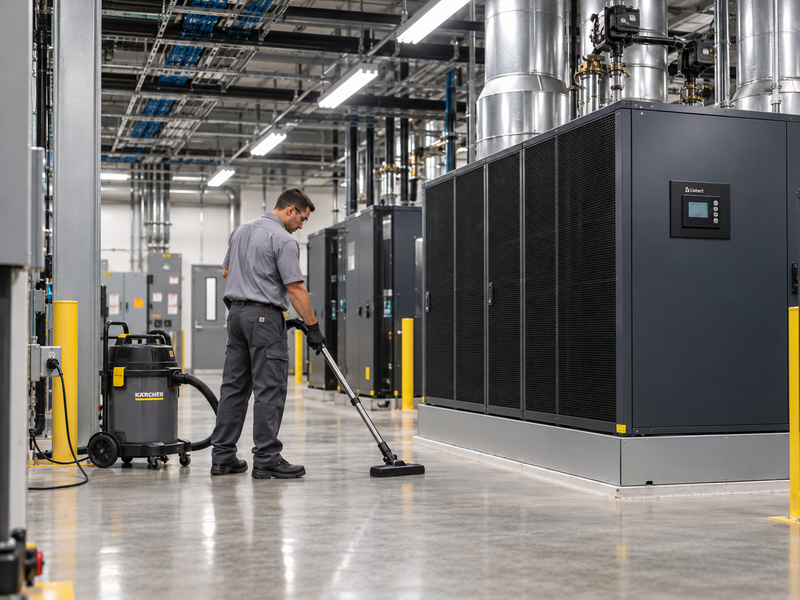
Data centers, server rooms, network rooms, and infrastructure spaces can accumulate dust and debris in areas routine janitorial teams may not be equipped or authorized to clean.
Contamination commonly collects around:
· Raised floors and accessible subfloor spaces
· Server and network rack exteriors
· Cable trays and cable pathways
· Airflow pathways
· Equipment-support surfaces
· CRAC and CRAH support areas
· Mechanical and electrical rooms
Controlled cleaning helps keep these environments clean, accessible, and maintenance-ready while respecting facility procedures, equipment boundaries, and operating conditions.
Industry Guidance on Data Center Cleanliness
Contamination control is a recognized part of data-center environmental management. ASHRAE TC 9.9 guidance addresses particulate and gaseous contamination as reliability considerations for IT and datacom equipment and has recommended maintaining data-center environments to ISO Class 8 airborne particulate cleanliness.
ISO 14644-1 provides an internationally recognized framework for classifying air cleanliness by airborne particle concentration. TIIS does not represent routine cleaning as an ISO certification or classification service; rather, these industry references help explain why disciplined particulate control and removal of accumulated contamination matter in critical environments.
Air filtration is only part of contamination control. Particles can also settle on floors, raised-floor systems, racks, cable pathways, equipment-support surfaces, and other horizontal or infrastructure-adjacent areas. Facility activity and airflow can disturb and redistribute settled material, making controlled surface cleaning an important part of an overall contamination-control strategy.
Critical Environments We Clean
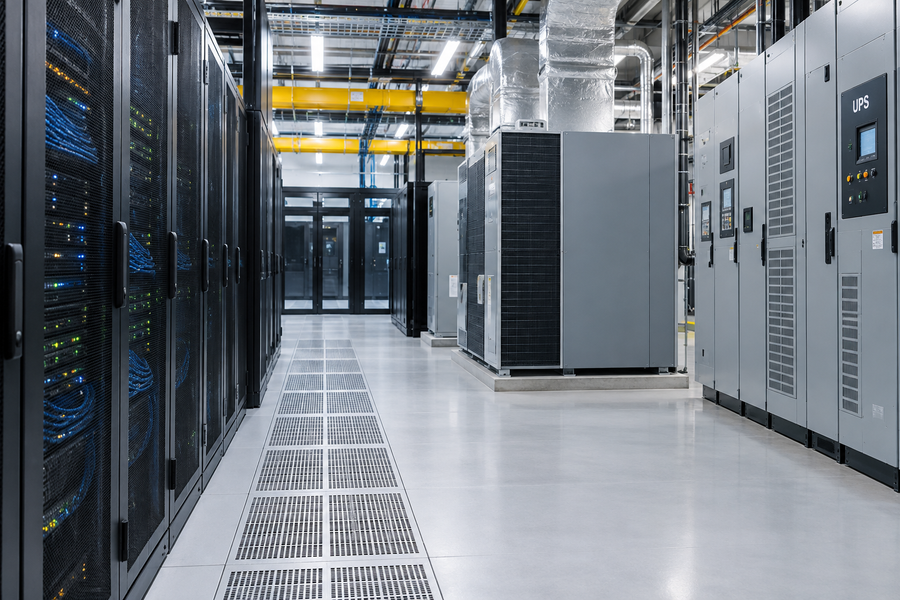
TIIS supports approved-surface cleaning throughout commercial, industrial, and mission-critical facility environments.
Data Centers & Server Rooms
Cleaning support for floors, raised-floor areas, rack exteriors, cable pathways, airflow-adjacent areas, equipment-support surfaces, and other approved hard surfaces.
MDF, IDF & Network Rooms
Controlled cleaning for MDF rooms, IDF rooms, network closets, IT rooms, and communications spaces where dust and debris can collect around racks, floors, walls, cabling, and airflow pathways.
Raised Floors & Subfloor Areas
Cleaning support for approved raised-floor panels, accessible subfloor spaces, floor voids, cable pathways, airflow pathways, and support surfaces beneath or around infrastructure.
Mechanical & CRAC/CRAH Areas
Cleaning around CRAC units, CRAH units, mechanical rooms, HVAC-adjacent spaces, and related equipment-support areas.
Electrical & UPS Support Areas
Approved-surface cleaning coordinated around access limitations, safety requirements, energized-equipment boundaries, customer procedures, and site-specific restrictions.
Our Critical Environment Cleaning Process
Step 1 - Assess
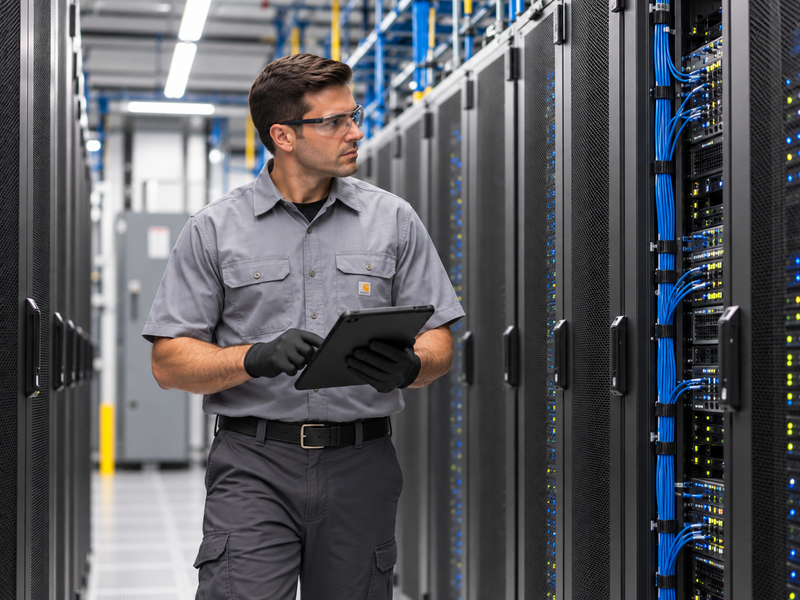
We review the space, contamination level, equipment proximity, access requirements, operating constraints, airflow considerations, and customer procedures.
Step 2 - Define & Protect
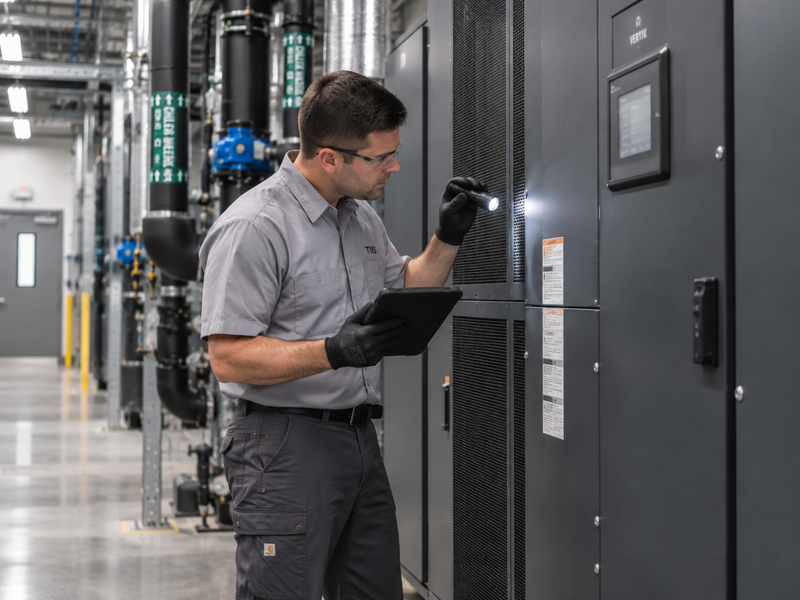
TIIS works with facility personnel to identify approved surfaces, restricted areas, sensitive equipment, energized-equipment boundaries, and site-specific requirements before cleaning begins.
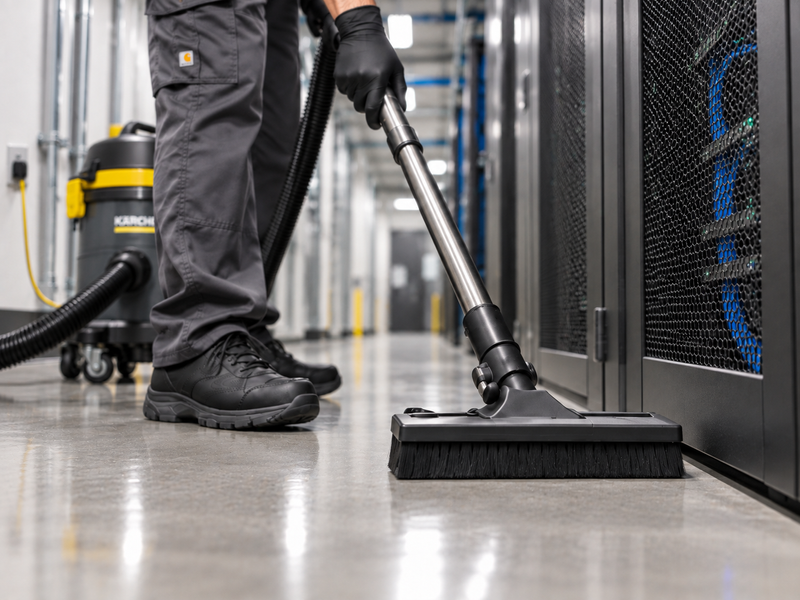
Step 3 - Clean
We use controlled cleaning methods appropriate for the approved work area, including low-moisture dry vapor steam cleaning where suitable.
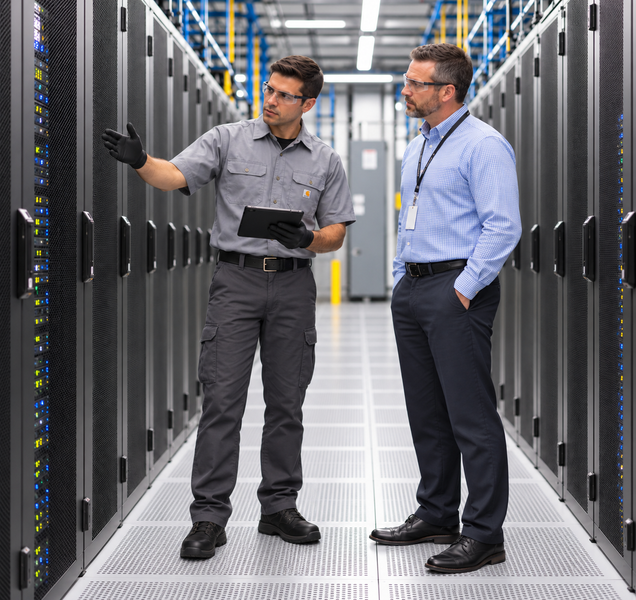
Step 4 - Verify
After cleaning, the work area is reviewed against the approved scope. Where applicable, observed maintenance concerns can be documented and communicated to the facility team.
Low-Moisture Dry Vapor Steam Cleaning
Where appropriate, TIIS uses commercial-grade low-moisture dry vapor steam cleaning for approved hard surfaces and infrastructure-adjacent areas.
What Makes Dry Vapor Steam Different?
Dry vapor steam uses high-temperature, pressurized steam with very low liquid-water content. Dry vapor is generally described as approximately 90-95% vapor, with only about 5-10% moisture. That is different from wetter steam, hot-water extraction, washdown, or other water-intensive methods that introduce substantially more liquid water to the work area.
TIIS commercial dry vapor steam equipment is capable of producing steam at temperatures up to 356°F and pressures up to 145 PSI. Steam output and vacuum power can be adjusted to the approved surface, soil condition, and cleaning method.
Steam, Loosen & Recover
The TIIS process combines high-temperature dry vapor steam with integrated wet/dry vacuum recovery. As the pressurized vapor helps loosen dust, dirt, residue, and other contamination from approved surfaces, the vacuum can simultaneously recover loosened material and residual moisture.
This is an important distinction from simply applying steam and allowing loosened material or moisture to remain behind. The objective is controlled cleaning with less liquid water introduced to the work area and immediate recovery of the material being removed.
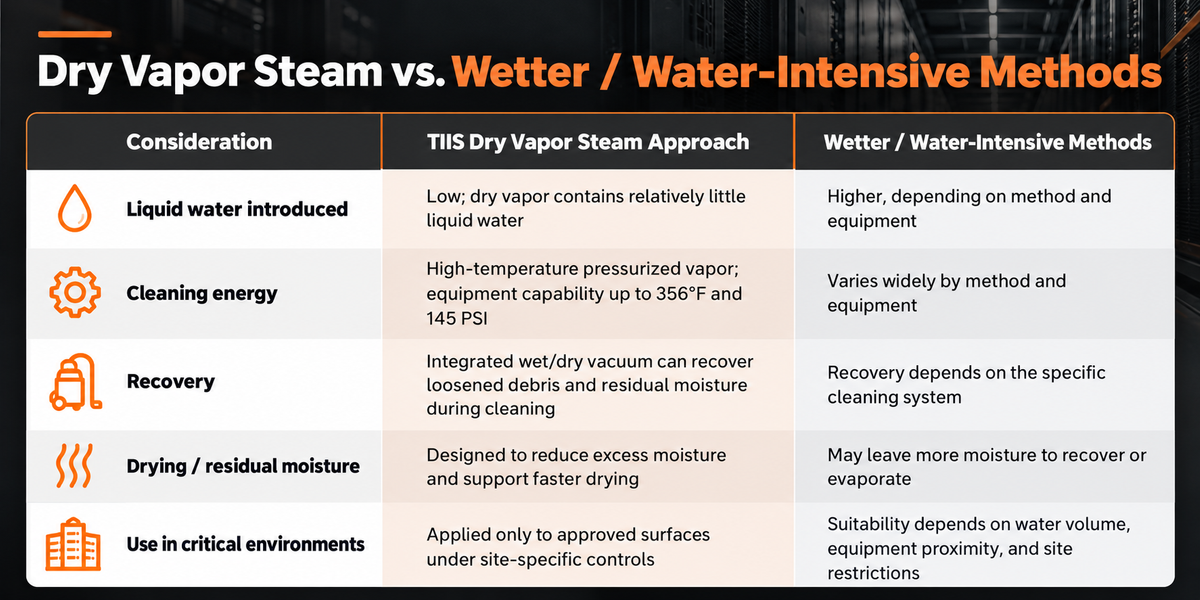
Why This Matters in Critical Environments
Data centers, server rooms, MDF/IDF rooms, electrical spaces, and other infrastructure environments require a more controlled cleaning approach than ordinary janitorial spaces. The goal is not simply to make a room look clean. The cleaning process must account for moisture, loosened debris, equipment proximity, access controls, airflow, operating schedules, and customer restrictions.
The combination of low liquid-water content, high-temperature cleaning action, adjustable pressure, and immediate vacuum recovery gives TIIS a controlled method for removing contamination from approved surfaces while minimizing excess water in the work area.
Potential applications may include approved:
· Hard floors and raised-floor surfaces
· Accessible subfloor support areas
· Rack and cabinet exterior surfaces
· Cable-support and infrastructure-adjacent surfaces
· Approved equipment exterior surfaces, where permitted by the customer and equipment requirements
· Mechanical equipment exterior surfaces
· CRAC/CRAH support areas
· Mechanical-room surfaces
· Other facility-approved hard surfaces
Important operating boundary: TIIS does not direct steam into servers, electrical panels, live electronics, energized equipment, or restricted components. Cleaning methods and approved surfaces are established with facility personnel before work begins.
Built for Facility Infrastructure
Critical environment cleaning requires a different approach than routine janitorial work.
TIIS works around the mechanical, electrical, generator, HVAC, and critical-power infrastructure that supports commercial and industrial facilities. That infrastructure experience helps our team plan cleaning around access controls, sensitive equipment, operating schedules, customer uptime requirements, and facility procedures.
Partnering with Texas Industrial Infrastructure Services
Have a data center, server room, MDF/IDF room, raised-floor space, mechanical room, electrical room, or other infrastructure area that needs specialized cleaning?
Texas Industrial Infrastructure Services can review the space, approved surfaces, access requirements, operating conditions, contamination concerns, and the appropriate cleaning approach with your facility team.
Frequently Asked Questions
- How is dry vapor steam different from conventional steam or water-based cleaning?
- Dry vapor steam uses high-temperature steam with very low liquid-water content. TIIS combines the vapor with wet/dry vacuum recovery so loosened debris and residual moisture can be recovered during the cleaning process. This reduces the amount of water introduced to the work area compared with wetter or water-intensive cleaning methods.
- Can TIIS clean around operating equipment?
- Work is planned around customer procedures, approved surfaces, access restrictions, and energized-equipment boundaries. The cleaning method and work sequence are established with facility personnel before work begins.
- Does TIIS clean inside servers or energized electrical equipment?
- No. TIIS does not direct steam into servers, electrical panels, live electronics, energized equipment, or restricted components.
- What do ASHRAE and ISO have to do with data center cleaning?
- ASHRAE data-center guidance recognizes particulate contamination as an environmental reliability consideration and has referenced ISO Class 8 airborne particulate cleanliness. ISO 14644-1 provides the international framework for classifying airborne particle cleanliness. These references support the importance of contamination control; they do not mean routine TIIS cleaning certifies a facility to an ISO class.
Contact Us
For more information about our data center, server room, and critical environment cleaning services, or to schedule a consultation, please contact us. Our team will work with you to review your facility, identify approved surfaces and access requirements, and coordinate a controlled cleaning approach that supports your operational and infrastructure needs.