
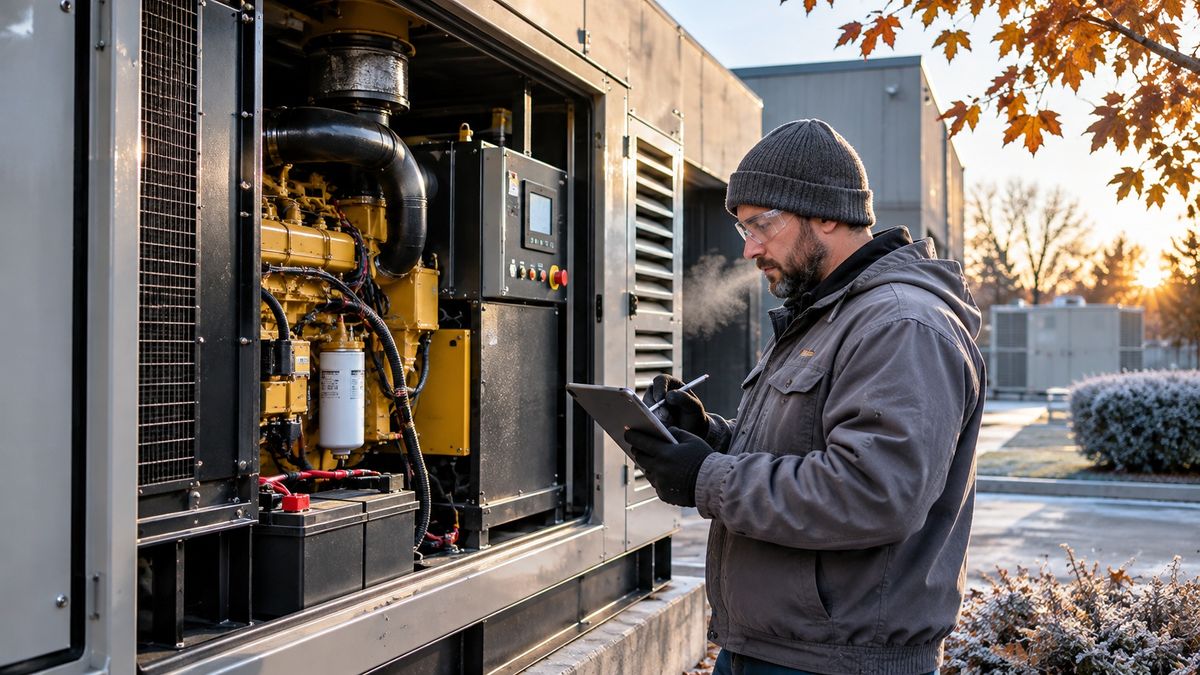
Texas winters are unpredictable. A facility may move from mild weather to a hard freeze in a matter of days, and that temperature swing can expose weaknesses in standby-power systems that appeared normal during warmer conditions.
For facility managers, winter generator readiness is not simply about whether the engine starts during a routine exercise. A reliable emergency-power system depends on the starting system, coolant and heaters, fuel quality, transfer equipment, alarms, ventilation and the generator's ability to support the required electrical load.
The best time to discover a weak battery, failed block heater, water in the fuel system or transfer-switch problem is before the first winter outage.
Why Cold Weather Changes Generator Risk
Cold weather can reduce battery performance, make starting more difficult and expose weaknesses in engine-heating and fuel systems. Caterpillar's winter diesel engine checklist recommends checking battery condition, block and oil heaters, glow plugs or air-inlet heating systems, fuel-water separation and coolant freeze protection before winter operation.
For emergency and standby systems, the current NFPA 110 standard addresses performance, maintenance and testing of the complete emergency power supply system, including the power source, transfer equipment, controls and related accessories.
Texas Commercial Generator Winter-Readiness Checklist
1. Test the starting batteries under load. A battery can show acceptable voltage and still fail when asked to crank a large diesel engine. Check battery age, terminal condition, charger output and actual battery performance. Cold weather can turn a marginal battery into a no-start event.
TIIS has a deeper guide on this failure point: Why Battery Failure Is the #1 Reason Generators Don't Start.
2. Verify block heaters and coolant heaters. Engine heaters help keep the engine at a temperature that supports reliable starting and rapid load acceptance. Confirm heater operation, power supply, associated alarms and visible wiring or connection condition before freezing weather arrives.
3. Check coolant condition and freeze protection. Review coolant level, visible leaks, hose condition and freeze protection appropriate for the equipment and expected ambient conditions. A cooling-system issue that is minor in mild weather can become a larger problem when temperatures drop.
4. Inspect fuel condition and water separation. Stored diesel can accumulate water, sediment and biological contamination. Cold weather can make marginal fuel conditions more noticeable. Review fuel age, tank condition, water separators and any recent fuel-testing or polishing history.
For more detail, see How Fuel Quality Affects Generator Reliability.
5. Review the enclosure, louvers and airflow path. Inspect weather seals, doors, louvers, radiator discharge areas and intake openings. Remove leaves, stored materials or other obstructions that could interfere with airflow. Confirm that rain, ice or wind-driven moisture is not reaching sensitive components.
6. Inspect belts, hoses and visible connections. Temperature changes can make aging rubber, loose clamps, worn belts and small leaks easier to expose. Look for cracking, glazing, abrasion, corrosion, seepage or vibration damage.
7. Review controller alarms and event history. Do not rely only on the current display. Review recent alarm history for low battery voltage, low coolant temperature, failed exercise events, sensor issues or other recurring warnings that may indicate a developing problem.
8. Verify the automatic transfer switch. A generator can be mechanically healthy and still fail to power the building if the ATS does not transfer correctly. Check controller status, alarms, visible condition and the facility's testing history.
Related TIIS guidance: ATS Failure Points and How to Identify Them.
9. Exercise the generator and observe the full start sequence. Watch more than the engine. Confirm crank time, oil pressure, coolant temperature, voltage, frequency, alarms, abnormal vibration, unusual exhaust conditions and the return to normal standby mode.
10. Verify performance under load. A successful no-load start proves only part of generator readiness. The system must also accept and sustain the required electrical load without unacceptable voltage, frequency, temperature or engine-performance problems.
If the generator has not recently been tested under meaningful load, review How Often Should Industrial Generators Be Load Bank Tested?.
Do Not Treat Winter Readiness as a One-Time Start Test
A generator's readiness depends on the system around it. A strong winter review should consider the generator, batteries, fuel, coolant, engine heaters, ATS, controls, alarms, ventilation and maintenance history together.
That system-level approach is also why TIIS offers commercial generator services that include preventive maintenance, diagnostics, load-bank testing, fuel management, battery health checks and seasonal weatherization.
Use Documentation to Close the Gaps
The final step is documentation. Record what was inspected, what was tested, what passed, what needs corrective action and who owns the follow-up. A winter-readiness checklist is only valuable if identified deficiencies are resolved before the next outage.
For facilities that need a broader system review, TIIS also explains what a generator downtime risk assessment includes.
To review your facility's generator before winter conditions arrive, contact TIIS to discuss a generator reliability or seasonal-readiness assessment.
Quick FAQ
What is the most important winter generator check?
There is no single component that guarantees reliability, but battery condition, engine-heater operation, fuel quality and actual load performance deserve particular attention because each can prevent a generator from starting or carrying the facility when needed.
Does a weekly or monthly exercise prove the generator is winter-ready?
Not necessarily. A routine exercise can confirm that the engine starts and runs, but it may not verify transfer performance, full-load capability, battery reserve, fuel condition or cold-weather heater operation.